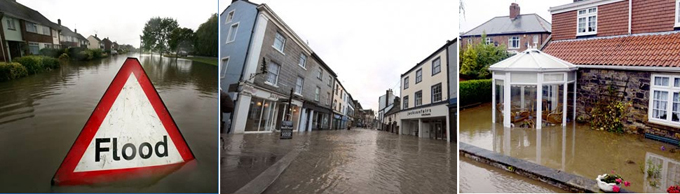
Advice for people who live in areas liable to flooding.
Floodline Warnings Direct
Call Floodline on 0845 988 1188 to sign up to receive a free message when flooding is about to occur and your property
may be affected.
The Citizens Advice Bureau
They may be able to offer advice on how to obtain money in an emergency and deal with insurance queries.
The Met Office
For an upto date weather forecast visit the met office website for a look at the forecast for the next 30 days.
IN THE EVENT OF A FLOOD IT IS IMPORTANT TO FOCUS ON THE SAFETY OF YOU & YOUR FAMILY.
If it is about to flood :
-
Tune into your local radio station on a battery or wind up radio
-
Switch off your electricity/ gas supply
-
If you have a flood plan put it into action
-
Move important items to safety
If there is time fit any flood protection products you might have such as:
-
Flood Barriers
-
Airbrick Covers
-
Sandbags or Alternative Barriers
-
Toilet Bungs
-
Any other Flood Products
You should be prepared to act quickly and get yourself to safety. Put the safety of people first and listen to advice from
the Police and Emergency Services. Remember that their concern is for your safety.
Floodwater is Dangerous
-
Six inches of fast flowing water can knock you over
-
Two feet of water will float a car
-
Flooding can cause manhole covers to come off, leaving hidden dangers
-
Dont walk or drive through flood water
-
Dont let children play in flood water
-
Dont walk on sea defences or riverbanks
-
When water levels are high be aware that bridges may be dangerous to walk or drive a car on
-
Culverts are dangerous when flooded
-
Look out for other hazards such as fallen power lines and trees
-
Wash your hands thoroughly if you touch floodwater as it may be contaminated
After a Flood
-
Take care as there may be hidden dangers in the flood water like sharp objects, raised manhole covers and
pollution
-
Flood water could have caused structural damage to your property.
Ring your buildings and contents insurance company as soon as possible
-
In almost all cases the Insurance Company will send a loss adjuster to look at your property. They will confirm
what repairs and replacements are needed and covered by your policy. Ask if they will help pay for repairs that will reduce
the potential flood damage and therefore reduce costs if it happens again.
-
If you rent your property, contact your landlord and your contents insurance company as soon as possible
-
If you do not have insurance your local council should be able to provide information on hardship grants or charities
that might be able to help you
Clearing up after a flood
There are a number of things to be aware of when clearing up after a flood
-
Flood water can contain sewage, chemicals and animal waste; always wear waterproof clothes and gloves, wellingtons and a face mask.
-
If your electricity supply is not already switched off at the mains, get a qualified person to do this.
-
If you have gas or oil central heating and it has been checked by an engineer turn it on. Keep the thermostat between 20-22 degrees for steady drying
-
You can get water out of your property using a pump and generator. Positon the generator outside in the open air as generators produce carbon monoxide fumes which can kill.
-
Only pump water out water when flood levels outside your property start to be lower than inside. This reduces the risk of structural damage
-
Shovel mud away evenly from both sides of a wall. This stops pressure building up on one side.
-
You can clean and disinfect your property using ordinary household products.
-
A garden hose is useful for washing down. Do not use a high pressure hose as they blast contaminated matter into the air
-
If you are drying your property naturally keep doors and windows open as much as possible. If using dehumidifiers close external doors and windows.
FLOO